If you live in Israel, chances are you used an elevator this week. You got in, pressed a button, and everything else just happened, as if it were a given. But inside the shaft hides an amazingly complex machine, with dozens of components that each do a critical job so you reach your floor safely, without having to think about it for even a moment.

So we've put together for you the first dictionary of its kind in Hebrew for elevator parts: the names of the parts, what they do, and how they work. All in simple, easy-to-understand language. So, going up or going down?

The drive system

This is where the elevator's muscles are. Everything to do with raising and lowering the car, from the motor to the ropes.

1

Hoisting machine (the motor, or "the machine")

The muscles. 馃挭

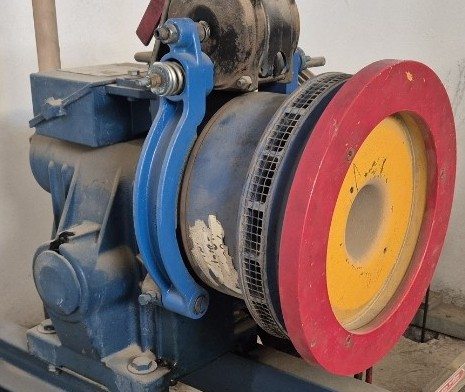
This is the part that does the heavy lifting, quite literally. A powerful electric motor turns a sheave, and the sheave moves the ropes that raise and lower the car. There are two main types: geared, the older and noisier one, and gearless, the quiet and efficient one that is common in modern elevators.

Fun factThe gearless motor was invented as early as 1903, and it is what made fast elevators, and with them truly tall skyscrapers, practical. Without the speed it provided, a ride to the 80th floor would take forever, and cities like New York would look completely different today.
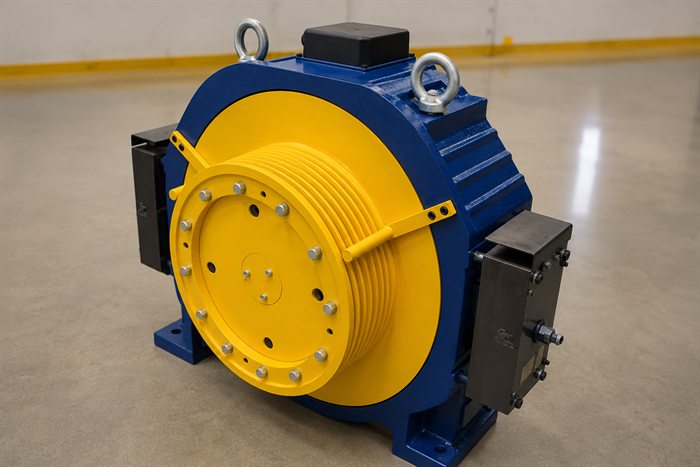
The hoisting machine, one of the most important elevator parts
2

Drive sheave

Holds all your weight. Without complaining.

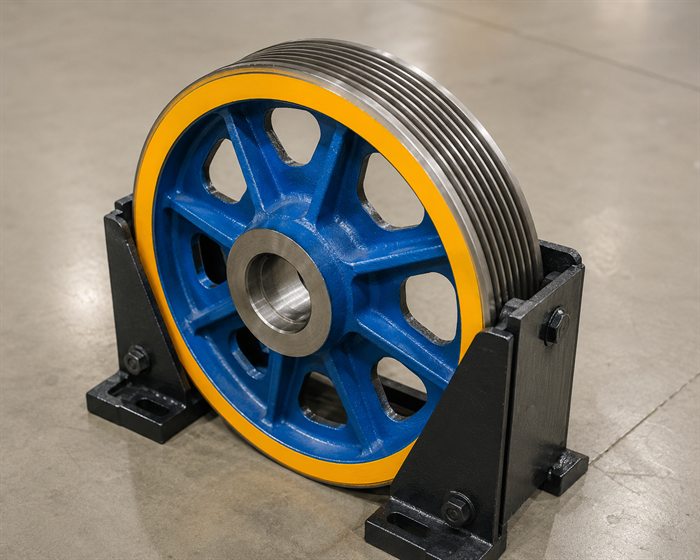
A large metal wheel with grooves that the hoist ropes sit in. When the motor turns it, the friction between the ropes and the grooves is what pulls the car up and down. No glue and no tying, just pure friction. That's why this method is called traction drive.

An elevator drive sheave
3

Frequency controller

The elevator's gas pedal.

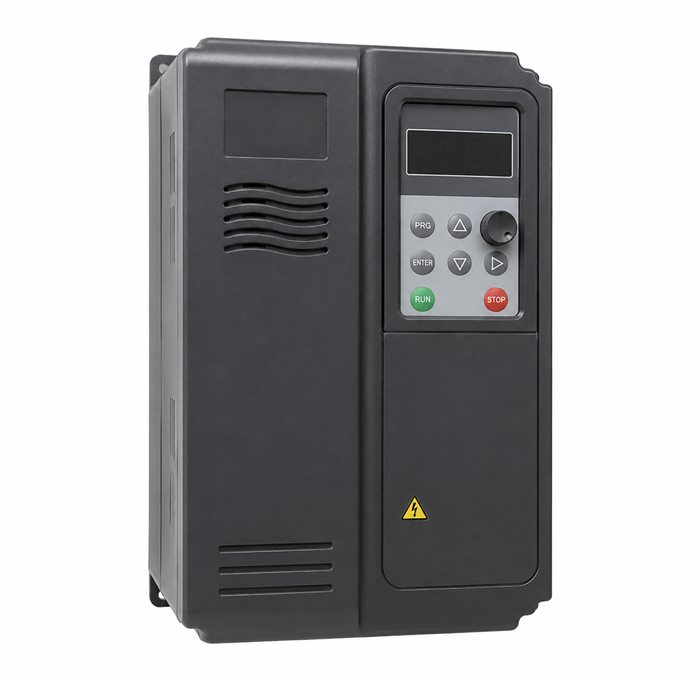
Elevators used to start and stop with a jolt that made your stomach jump. The frequency drive put an end to that. It controls the voltage and frequency that reach the motor, so the elevator speeds up and slows down smooth as silk and stops exactly level with the floor. As a small bonus, it also saves a lot of electricity.

An elevator frequency drive
4

Encoder

The elevator's eyes. It always knows where the car is.

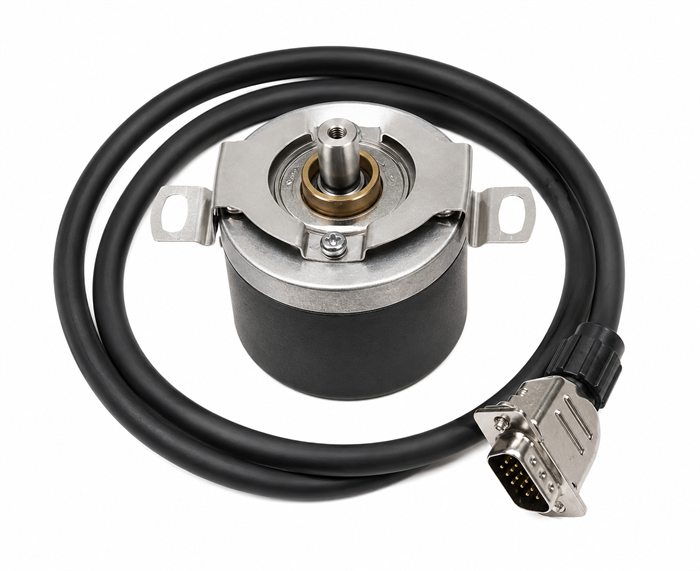
A small sensor that counts and measures exactly where the car is and how fast it is moving, and reports this to the frequency drive dozens of times a second. Thanks to it, the elevator stops exactly at the floor, without the small, annoying step you sometimes get in elevators that don't have an encoder.

An elevator encoder
5

Brake

Foot on the brake. All the time.

A powerful brake that grips the motor and holds the car in place when it stands at a floor. And it has a rather clever trick: it works the opposite way to what you probably think. Electric current doesn't apply it; it actually releases it. Springs are constantly trying to "close" it. So if there is a power outage, the brake engages by itself, automatically and completely mechanically. A simple but brilliant safety mechanism.

An elevator brake
6

Hoist ropes

Yes, there really are several of them, not one. And yes, they are incredibly strong.

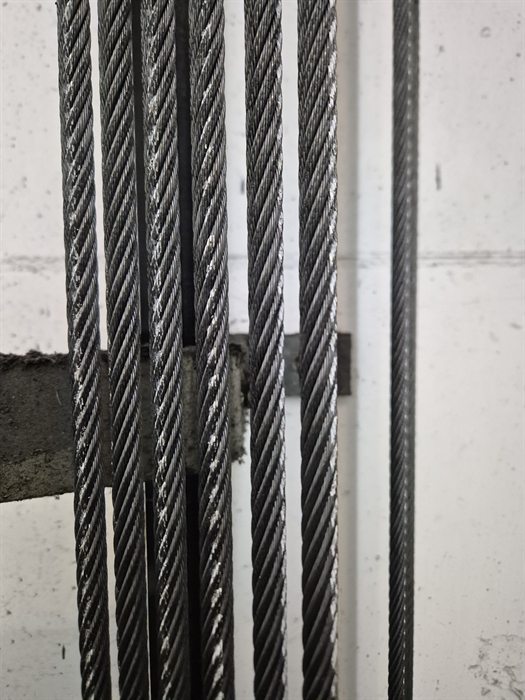
A bundle of twisted steel wire ropes that carry the car. Their thickness and number are set according to the elevator's specifications. There are always several ropes connected in parallel, and each one on its own can hold the car up to its maximum permitted load, and even a little more.

Elevator hoist ropes
7

Counterweight

The silent partner that does half the work.

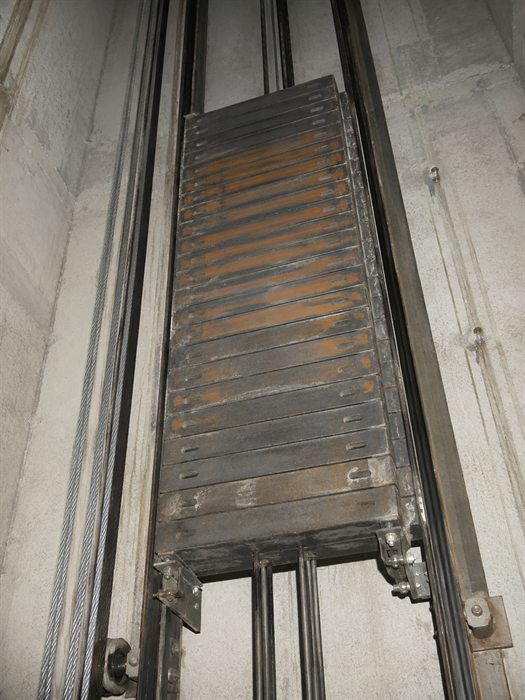
This is a weight, or a set of weights, that travels in the shaft in the opposite direction to the car, just like a seesaw. When you go up, it goes down, and when you go down, it goes up. It weighs about as much as the car plus half the permitted load, so the motor doesn't have to lift the whole weight on its own, only the small difference. That's the secret behind how energy-efficient elevators are.

An elevator counterweight

Safety system

If the drive system is the muscles, this is the system of reflexes and protection. Most of the components here spend their whole lives without ever doing their job; they just wait for the one moment when they will have to save the day.

8

Overspeed governor

The shaft's traffic cop.

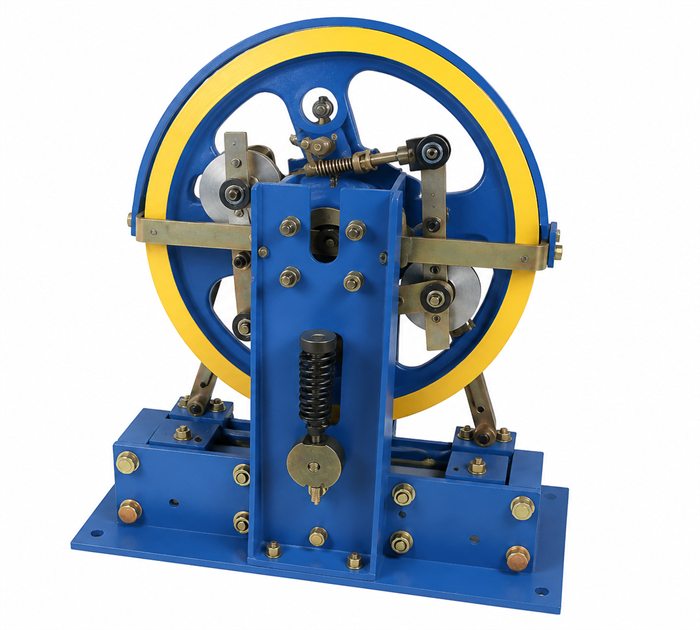
A clever mechanical device whose only job is to track the car's speed. As long as everything is fine, it just spins quietly. But if the car starts going down too fast, about 15 percent above its normal speed, it springs into action and triggers the safety gear. Like the brake, it works completely mechanically and doesn't need a power supply.

An elevator overspeed governor
9

Safety gear

The elevator's seat belt.

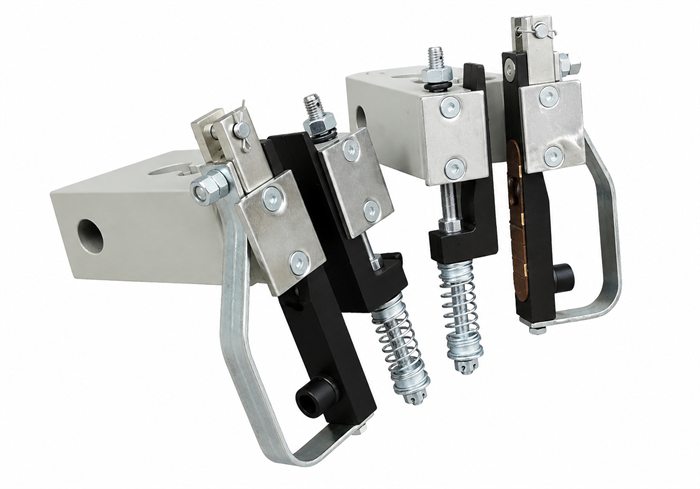
If the overspeed governor detects that the car is going down too fast, this device kicks in and physically grips the guide rails with steel jaws until the car comes to a complete stop. This pair, the governor that detects and the safety gear that stops, exists in every elevator that meets the standard. The safety gear is built so that the car's downward movement itself makes it lock onto the rails even harder. And once again, you guessed it, it works completely mechanically, with no need for electricity to activate the mechanism.

Fun factIt is said to this day that the entire modern elevator industry was born from the invention of this component. In 1853 Elisha Otis invented the first safety device, and to prove it worked he rode a loaded elevator in front of a crowd and ordered the rope holding it to be cut. The car dropped a few centimeters and the device caught it in midair. That demonstration was a turning point that gave people confidence in elevator safety mechanisms.
Elevator safety gear
10

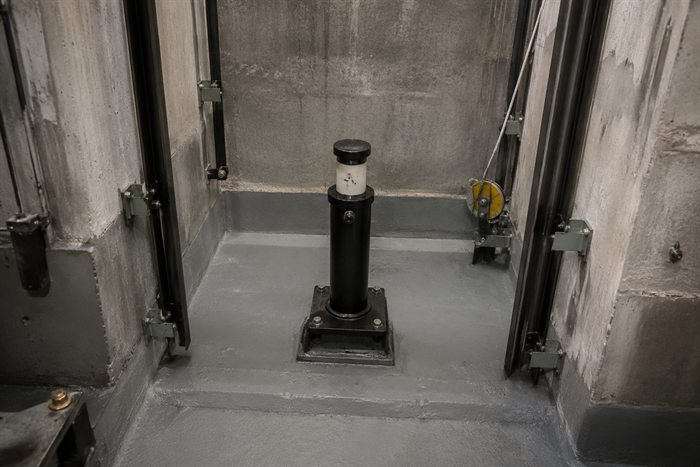
Buffers (bumpers)

The "mattress" at the bottom of the shaft.

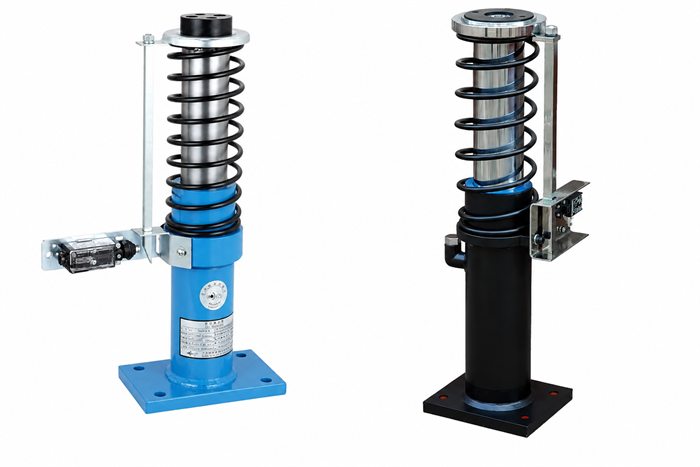
At the bottom of the shaft, under the car, large buffers of one of three types are installed: spring, hydraulic or polymer. They are the last line of defense: if for some reason the car goes down below the lowest floor, they absorb the impact and soften the stop. Think of them as the elevator car's airbags.

Buffers at the bottom of an elevator shaft
11

Limit switches

That's far enough, buddy.

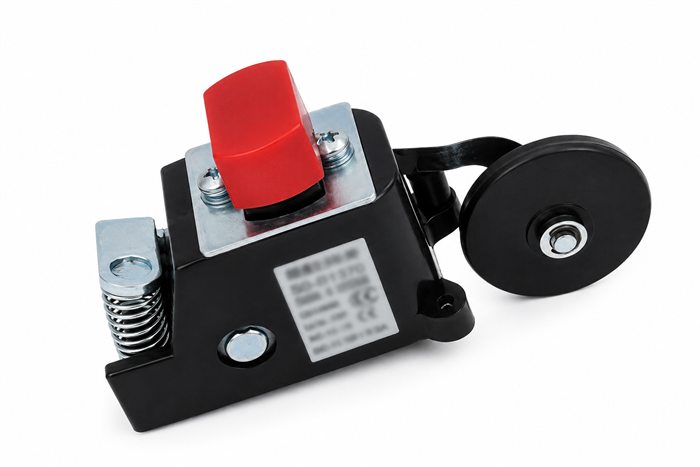
Like electric stop signs, these switches are located at the top and bottom ends of the shaft and make sure the car doesn't go beyond its limits. If it tries to keep traveling too far up or down, they stop it, and in an extreme case they even cut its power completely.

An elevator limit switch
12

Emergency unit

When everything shuts off, it wakes up.

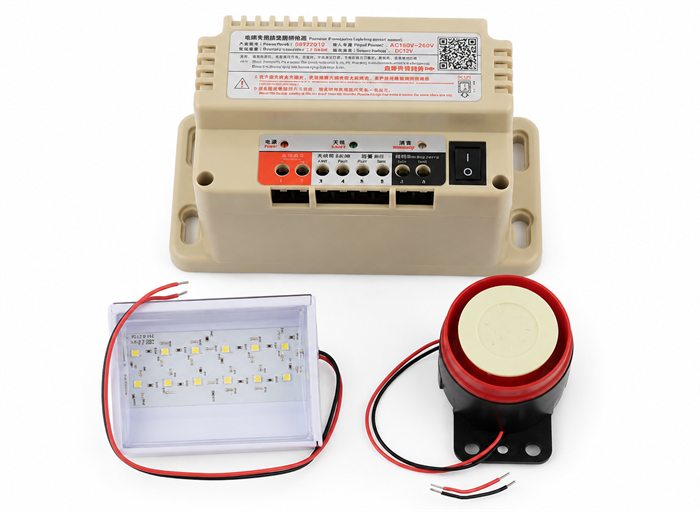
When there is a power outage, this system kicks in automatically. An independent backup battery unit keeps powering the critical components, emergency lighting comes on so you're not left in the dark, an alarm lets you make yourself heard outside, and an emergency dialer automatically calls the service company's monitoring center so they can talk to you and send a technician. So if you get stuck, you're not really alone.

Fun factBy the standard, this communication system must keep working on the battery for a full hour after the power goes out. So you have time.
An elevator emergency unit
13

Load weighing system

It's not you. It's just an overload (just kidding, it is you 馃ぃ).

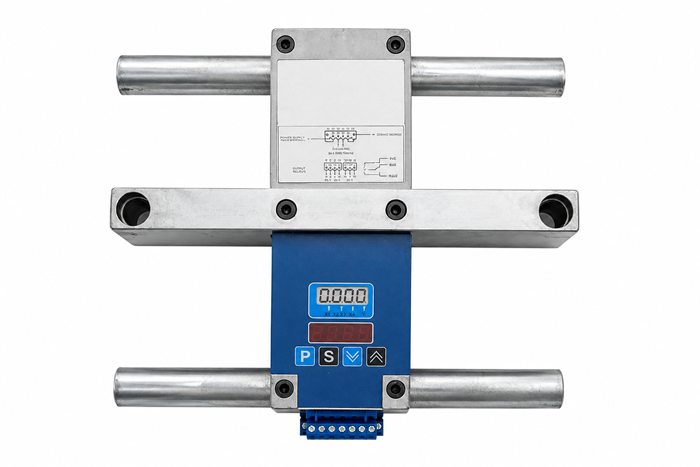
Every elevator has a maximum permitted load. This sensor knows how much weight is in the car. If you've squeezed in too many people, it simply won't let the door close, beeps stubbornly, and refuses to move until someone steps out. A little annoying, maybe, but it keeps you safe from riding in a car loaded beyond the limit.

An elevator load weighing system

Car system

Of all the parts and systems we're talking about here, this is the only one you actually see and meet. But even behind this familiar box there is more than meets the eye.

14

The elevator car and car frame

What you see, and what holds up what you see.

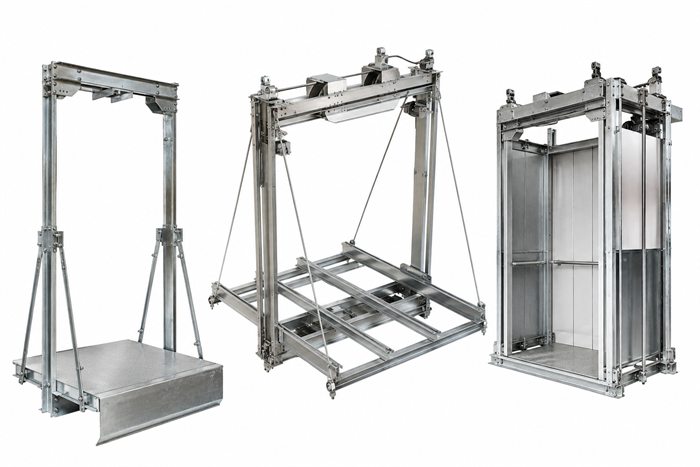
The elevator car is the box you stand in. But it doesn't hang from the ropes on its own; it sits inside a strong steel frame called a sling. The frame is what carries all the weight, holds the safety gear and the guide shoes, and is actually attached to the ropes. The beautiful, designed box is on the inside, and the strong, massive frame wraps around it on the outside.

The elevator car and car frame
15

Guide shoes

The car's rollerblades. They make sure it "glides" along the tracks.

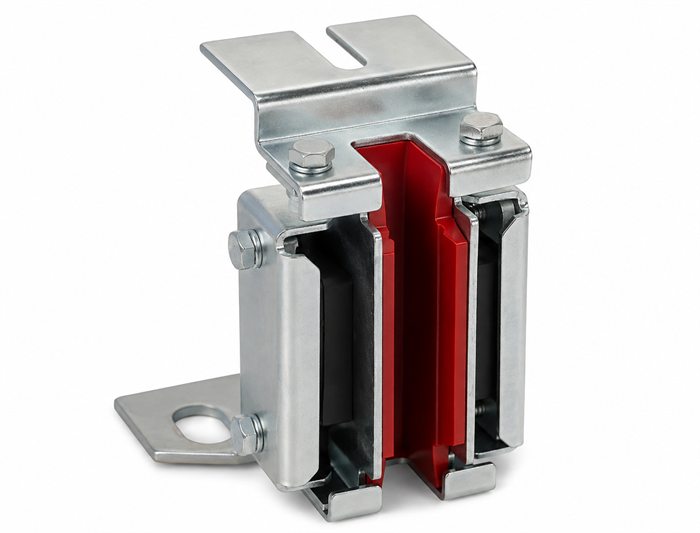
At every corner of the car there are shoes that grip the guide rails and keep the car snug and straight all the way. Some shoes are made of hard plastic materials, and others are made up of wheels or rollers. They are the reason the ride is smooth, and why you don't feel the car sway or rub against the guide rails.

Elevator guide shoes
16

Light curtain (electric eye)

The reason the door doesn't close on you halfway.

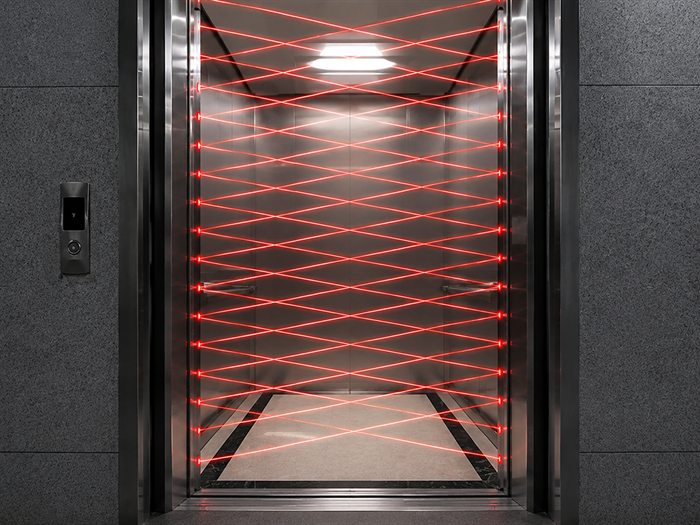
A screen of invisible light beams that crosses the doorway. The moment something crosses it, a hand, a foot, a shopping cart or a bag, the door stops and opens again immediately. There used to be only mechanical rubber edges that actually had to bump into you first. Luckily, technology has moved on a bit since then.

A light curtain in an elevator door

Door system

Sounds simple? Well, it isn't. The door system is one of the most sophisticated, delicate, complicated and important in the whole elevator. It is responsible for your safety, and because it has so many components, it is also where most faults come up.

17

Door motor (door operator)

Just as if you were nobility, it opens and closes the door for you.

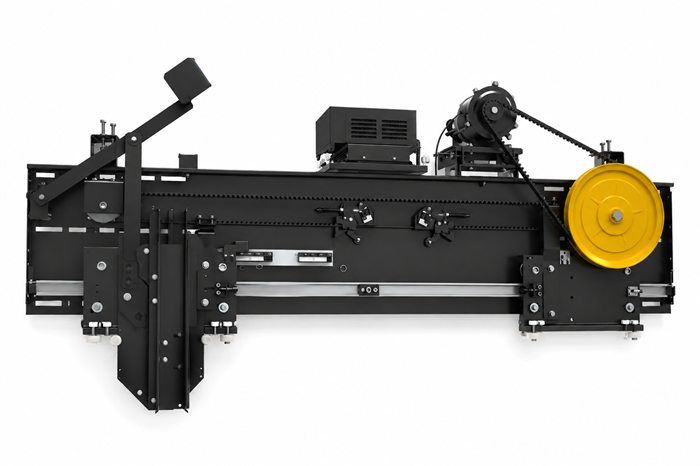
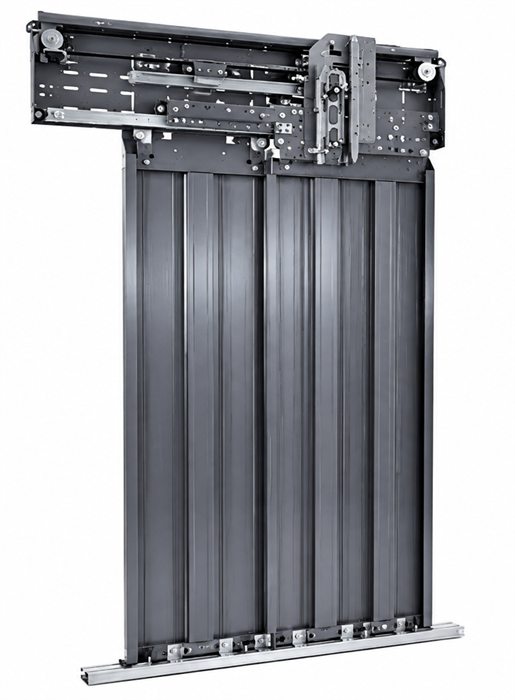
It would be hard to go into every detail here, because the system really is complex. But broadly, it is a small motor installed above the car door, an encoder (remember that one?) that knows the doors' current position, a mechanical operator driven by the motor, and an electrical controller that runs it all. The controller, with the help of the encoder, sets how fast the door moves so it doesn't open too hard or slam shut. It also sets how long the door stays open before it closes, and of course it is connected to the light curtain so it knows whether it needs to reopen the door unexpectedly.

An elevator door motor
18

Car door and landing doors

A pair. One doesn't move without the other.

Every floor actually has two doors: the car door, which travels with you, and the landing door, which waits on every floor. The landing door is passive and has no power, so it can't open itself. The door opening mechanism (from the previous entry) knows how to couple precisely with the landing door mechanism and open it along with it. One doesn't work without the other. When the car reaches the floor, that's what happens: a special sensor detects that the two components are coupled, and the doors can open.

An elevator car door and landing doors
19

Door locking mechanism

The shaft's gatekeeper.

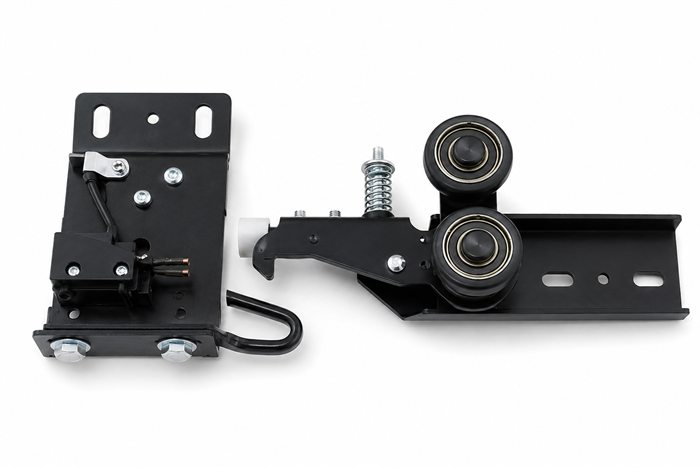
Mechanisms installed on every floor that enforce two clear rules. First, the elevator won't move unless all the doors, on every floor, are closed and locked. And second, a landing door can't open unless the car is waiting right there. Two rules that save lives.

An elevator door locking mechanism

Control system

We've talked about the muscles, we've talked about the protection system, and we've talked about the door and car systems. Now it's the brain's turn, the part that ties everything together.

20

Control panel (the controller)

The elevator's brain. 馃

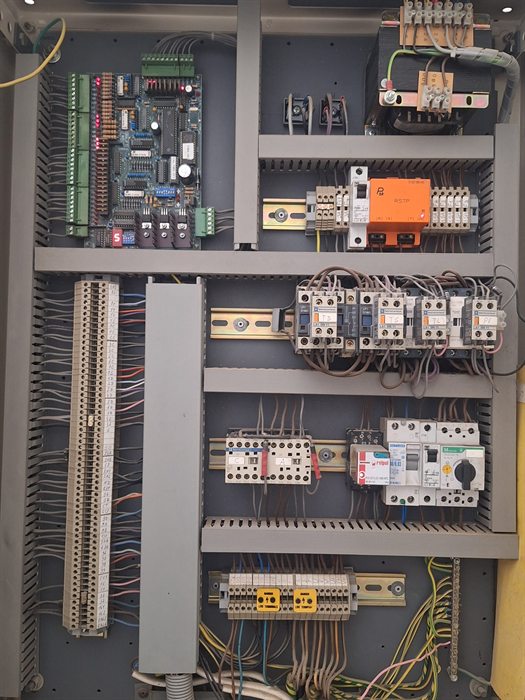
A good body with strong arms and legs is worth nothing without a brain. The controller, or control panel, is the system that receives information from all the elevator's systems and sensors and issues commands. It receives all the calls, decides where the car will go and in what order (know that feeling of waiting ages for the elevator to arrive? That's its fault), and constantly monitors parameters and all the safety components. It knows how to detect when something is wrong, and stop the elevator.

An elevator control panel (controller)
21

Operating panels and buttons

"The buttons". The way you communicate with the elevator.

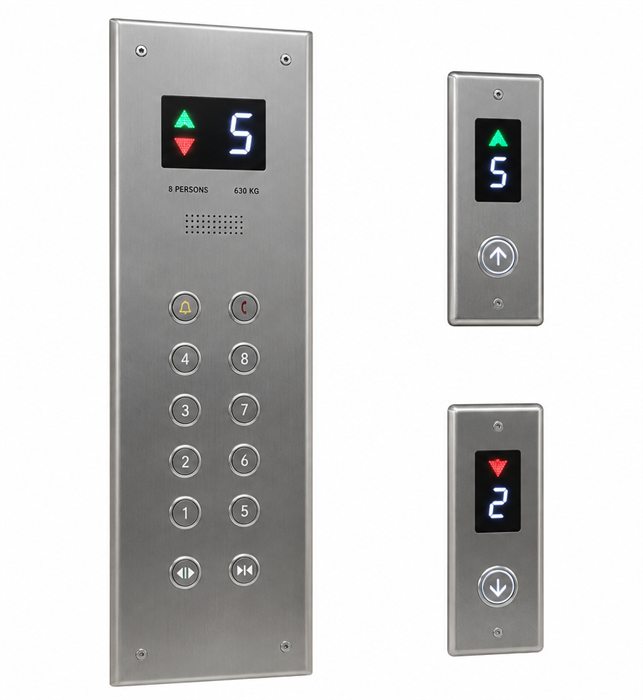
All the buttons and displays you know: the panel inside the car whose buttons you use to choose a floor, control the doors or press the alarm button, and the buttons on every floor that call the elevator. They are the go-between between you and the brain. It looks simple, but think about what happens when several buttons inside the car and several buttons on different floors are pressed at the same time. That information is sent to the control panel, processed, and turned into operating commands for the elevator and a particular order in which it will travel.

Fun factOn floors with a button panel that lets you call the elevator both up and down, many people press both arrows together, thinking it will come faster that way. What they are really doing is sending the control panel two calls instead of one. The controller then has to plan the elevator's route so it answers both calls, so they actually cause a delay for themselves, and for everyone waiting with them, in reaching the floor they want.
Elevator operating panels and buttons
22

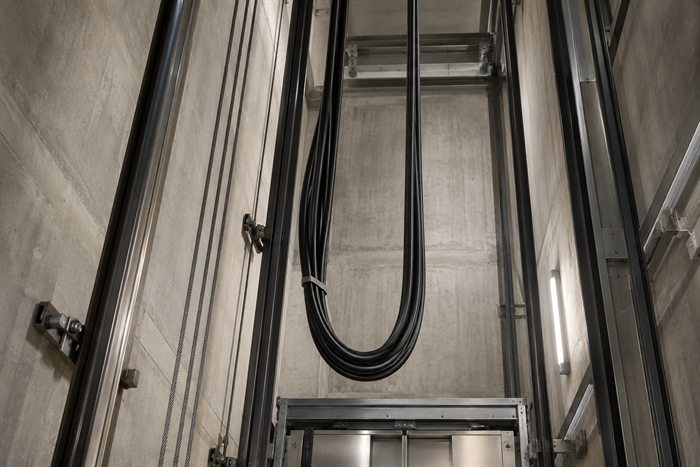
Travelling cable (or "flexible cable", or "flat cable")

The elevator's umbilical cord.

Even though the car is constantly moving up and down, there must never be a situation where power doesn't reach it. The travelling cable is the answer to how you supply power continuously to a car that is always moving. It is flat and flexible, hangs below or above the car and loops up and down with it. Next time you ride in a glass elevator, try to spot it.

An elevator travelling cable

Shaft structure

The shaft is the elevator's home; it will spend its whole life inside it. There are legal aspects to building it, which we cover in another article. Fixed, stable parts are attached to the shaft walls, and the elevator travels along them. Let's take a look.

23

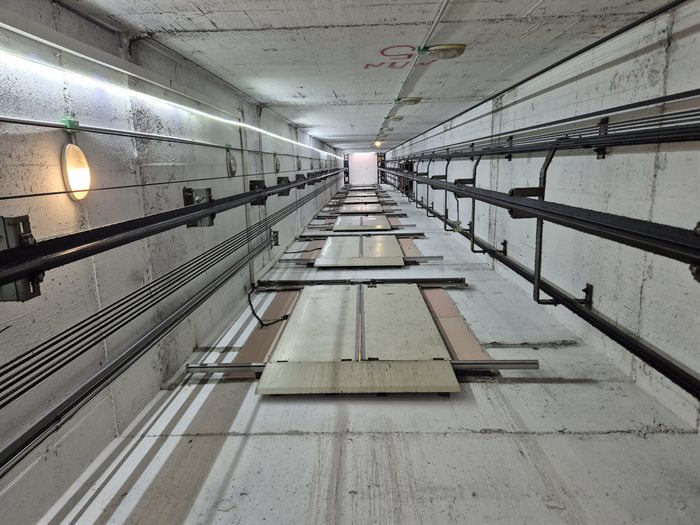
Elevator shaft

The channel where all the magic happens.

The vertical space that runs the full height of the building, in which the car travels, along with the counterweight beside it. The structure and location of the shaft are set at the building's architectural design stage, and of course there are precise legal and structural requirements for it. The size of the shaft determines the size of elevator that can be installed in the building, and its exact height can also affect the elevator's maximum permitted speed.

An elevator shaft
24

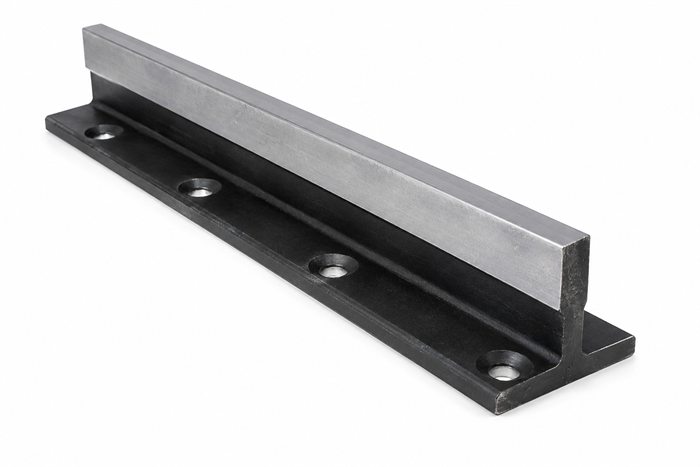
Guide rails

The elevator's tracks. Like a train, only vertical.

Two upright steel rails with a T-shaped cross section that run the full length of the shaft. They guide the car and the counterweight and keep them from traveling crooked. The guide shoes slide along them, and the safety gear grips them in an emergency. They really are the backbone of the shaft.

Fun factThe guide rails are installed to an accuracy of millimeters. When the elevator is moving at full speed, a misalignment of a millimeter or two in the rails can cause a strong jolt in the car, along with faster wear and tear on various components.
Elevator guide rails
25

Shaft pit

The elevator's basement.

The space below the lowest floor. That's where the buffers sit, and there is also enough room there for a technician to work safely under the car. Small, but essential.

An elevator shaft pit
26

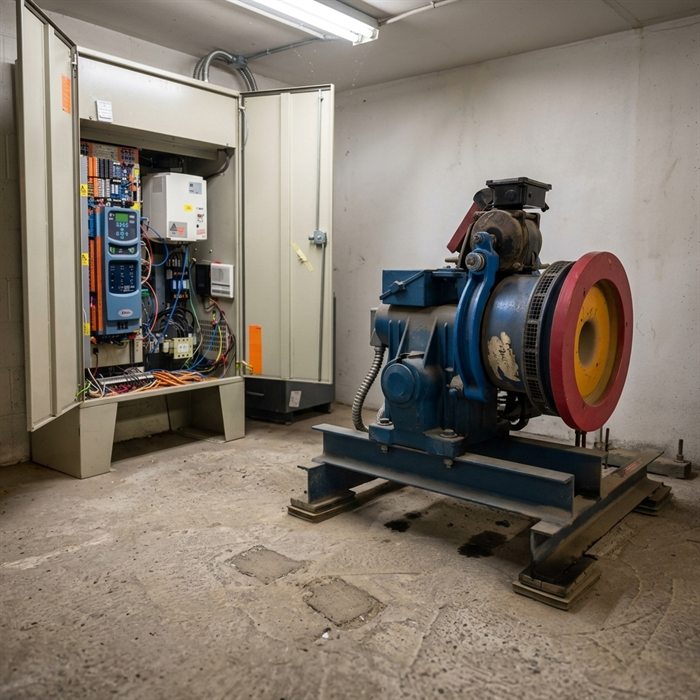
Machine room

A small room above or below the elevator where the motor and the control panel are installed.

This small room, usually located above the elevator's top floor, houses the hoisting machine, the controller and the frequency drive. Over the years, as technology has advanced, this equipment has become smaller and more compact, and most of it now fits inside the shaft itself, so the machine room is gradually disappearing. This saves valuable space in the building and changes how it is designed. Today, machine rooms exist mainly for very heavy or very fast machines.

An elevator machine room
But wait, what about a hydraulic elevator?

Hydraulic elevators have a different drive system, and so different parts as well.

So far we've talked about electric elevators, which make up the vast majority of elevators installed in buildings in Israel. But there is a second family: hydraulic elevators, which are common in low-rise buildings. Instead of a motor that pulls ropes from above, here the motor drives a piston that pushes the car from below using oil pressure. Most of the safety and car components are the same, but these three are unique to them:

27

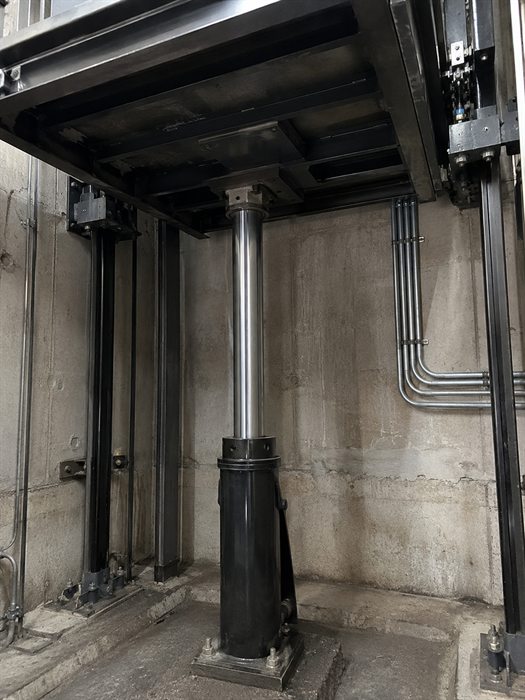
Piston and cylinder (jack)

Instead of ropes that pull, here there is a piston that pushes.

A massive steel piston sits inside a large cylinder and is connected to the car frame. The ropes that the electric elevator had don't exist here. When pressurized oil enters the cylinder, it pushes the piston up, and the piston raises the car. To go down, the oil is simply released and gravity does the work. There is no motor at the top and no counterweight.

Fun factHydraulic elevators actually came before electric ones. The first hydraulic elevator was built as early as 1845, years before Elisha Otis even presented his safe elevator.
The piston and cylinder of a hydraulic elevator
28

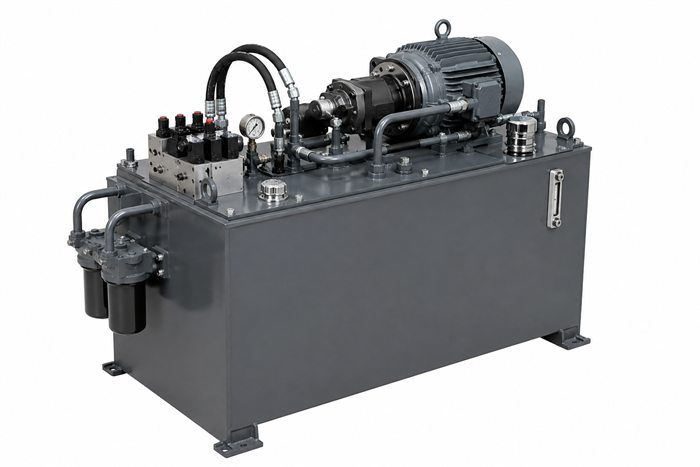
Power unit

It does the work, and the noise too.

This is the hydraulic elevator's machine: a pump, a motor and an oil tank, usually in a small room on the ground floor. The motor drives the pump, which pushes oil into the cylinder to raise the car. Going up it works hard, and going down it simply rests and lets the car descend under its own weight.

The power unit of a hydraulic elevator
29

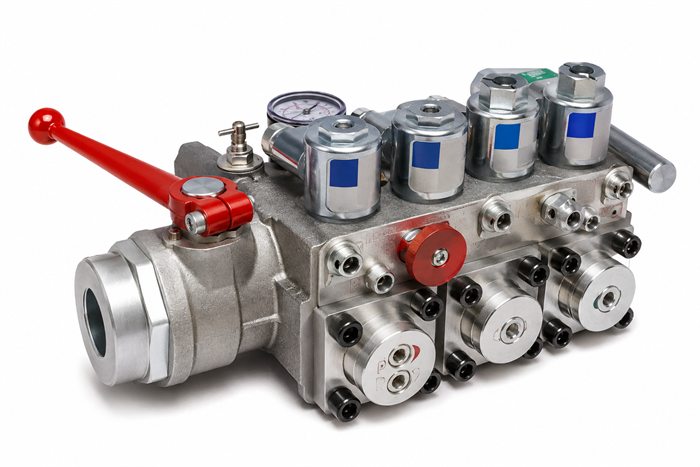
Control valve

Like a faucet, only smarter.

The clever part of the whole hydraulic elevator idea is in this valve. It regulates exactly how much oil flows and where, and so controls the acceleration, the deceleration and the precise stop at the floor. Going down, it is what releases the oil at a controlled rate so the car doesn't descend too fast.

The control valve of a hydraulic elevator

So now that you know all the parts of the elevator...

You may have noticed one thing: almost every part of the elevator is critical, and every component here, without exception, needs a professional eye looking after it so that it can look after you. A good elevator isn't just a collection of parts that simply work; it is a collection of parts that someone checks regularly and maintains properly. And that's exactly what we do.

So... talk to us!

Read about our maintenance service
Previous article How is an elevator installed?
Next article Why do elevators get stuck?