Hydraulic Elevator
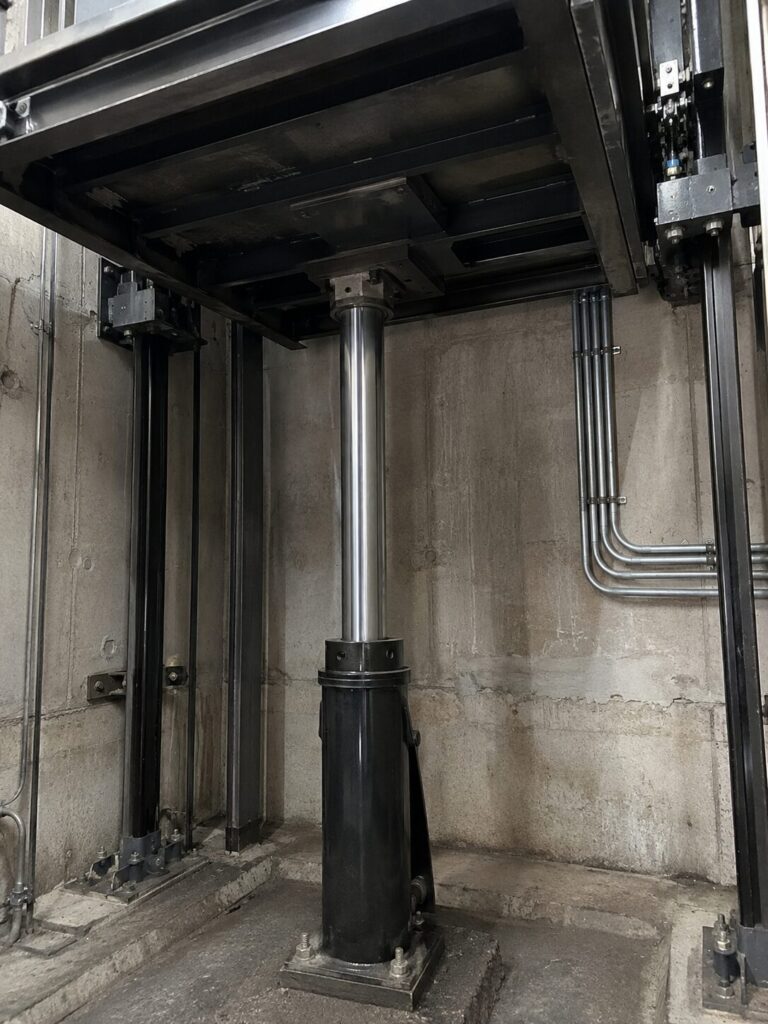
This is the simple, powerful method. Instead of a motor and cables pulling from above, a hydraulic elevator "sits" on a large telescopic piston. A pump forces oil through under pressure, and the oil raises the car from below. On the way down, a valve releases the oil back into the tank and the car descends under its own weight.
A hydraulic elevator does not need a "machine room" above the shaft. All it needs is a cabinet or a small room on the lowest floor, next to the shaft, housing the pump, the motor and the oil tank. It is suited mainly to low buildings, roughly 2 to 5 floors (it can go somewhat beyond that, but that is very uncommon). It is admittedly slower and uses more electricity on the way up, but it is reliable, allows for a wide, spacious car, and is relatively easy to install in an existing building.
Traction (Electric) Elevator
This is the workhorse of most buildings, and by a wide margin the most common type on the market. It runs on steel cables drawn over a sheave turned by a motor, with a counterweight hanging on the other end of the cable to balance the car, a bit like a bucket in a well. This method is fast, energy-efficient and suitable for almost any building height.
A traction elevator comes in two main versions, and the difference between them is simply where the motor sits:
With a machine room
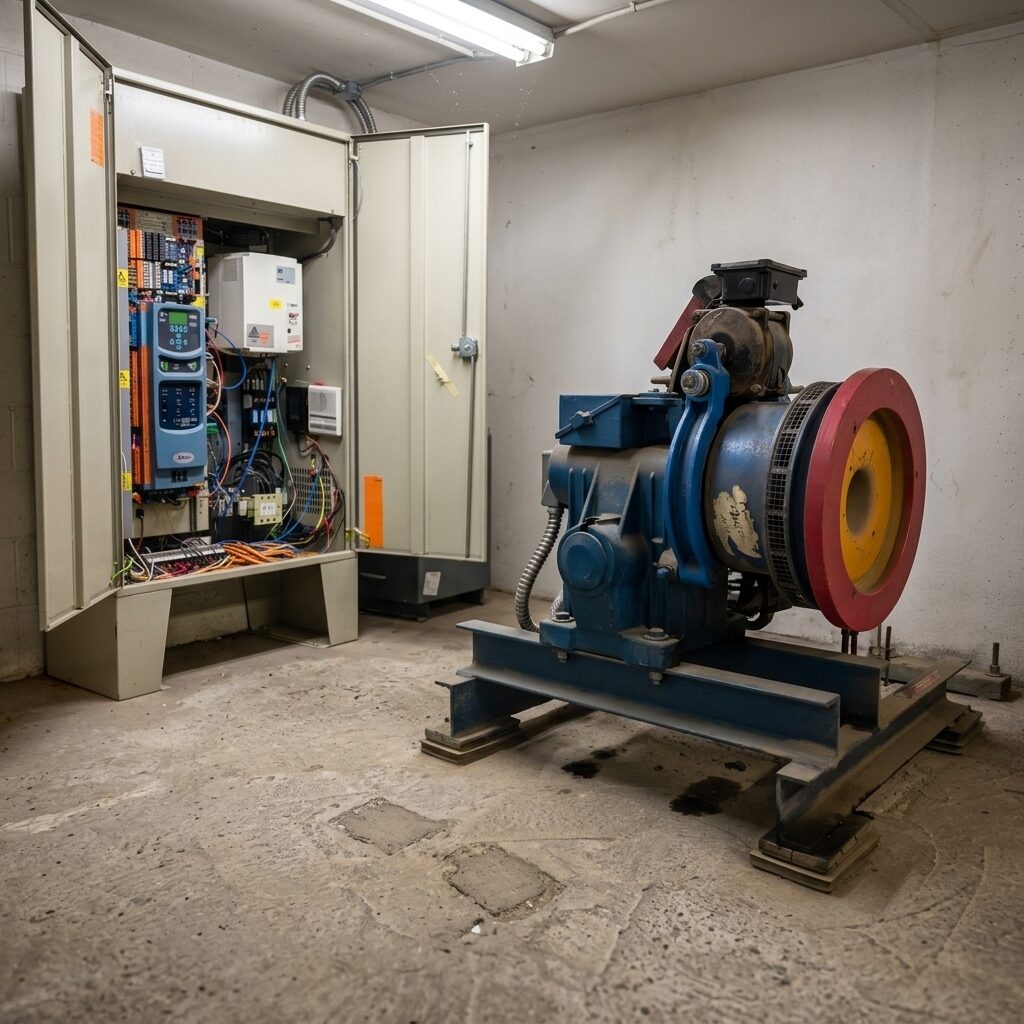
The classic version. The motor, the drive sheave and the control panel sit in a dedicated room, usually above the shaft. This is still the natural choice for tall buildings that need power and high speed.
Machine-room-less (MRL)
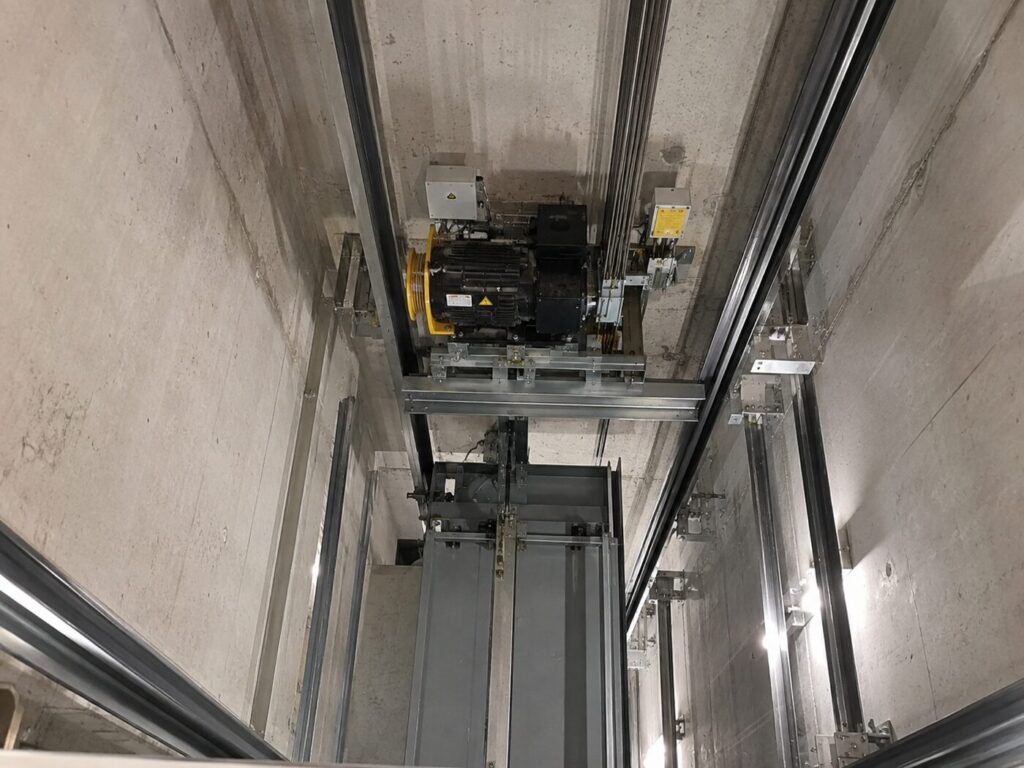
Exactly the same traction elevator, only the motor is built into the shaft itself, so no separate machine room is needed. This is today's standard in most new buildings: it saves space, it is quiet, it is energy efficient, and it is easier to add to an existing building.
Home elevator and platform lift
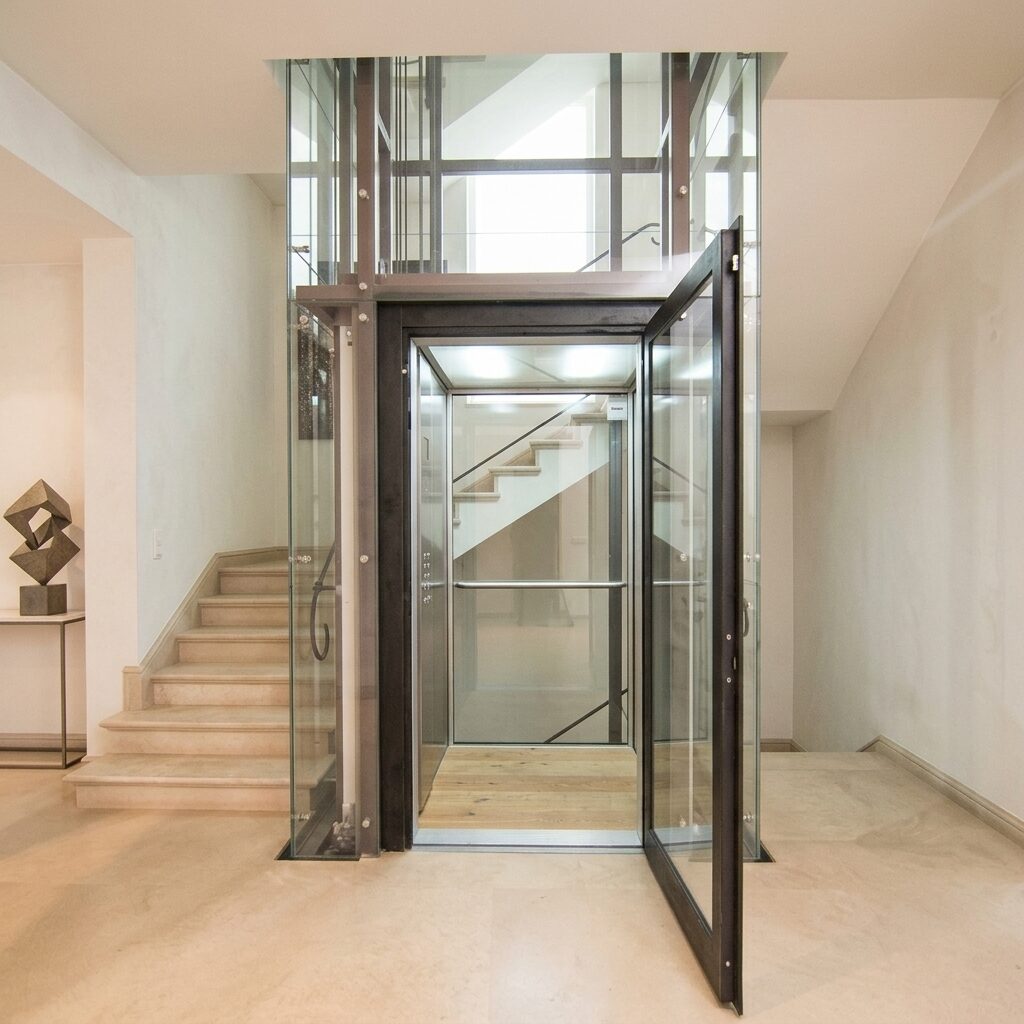
A home elevator is a compact solution for a private house, usually connecting 2 to 4 floors. It travels in its own modular shaft, with no machine room, and needs nothing more than a small control cabinet and a connection to a standard power outlet. Its close relative is the platform lift, which differs in being slower, is intended mainly for accessibility, and sometimes travels only for as long as the button is held down.
It is worth knowing that, contrary to what people tend to assume, installing a home elevator is not always simple. Depending on the structure of the house and the location chosen, it may call for substantial construction work, including breaking through walls and building a shaft. So before you fall in love with the idea, it is worth checking exactly what the work involves in your particular home.
Freight elevator
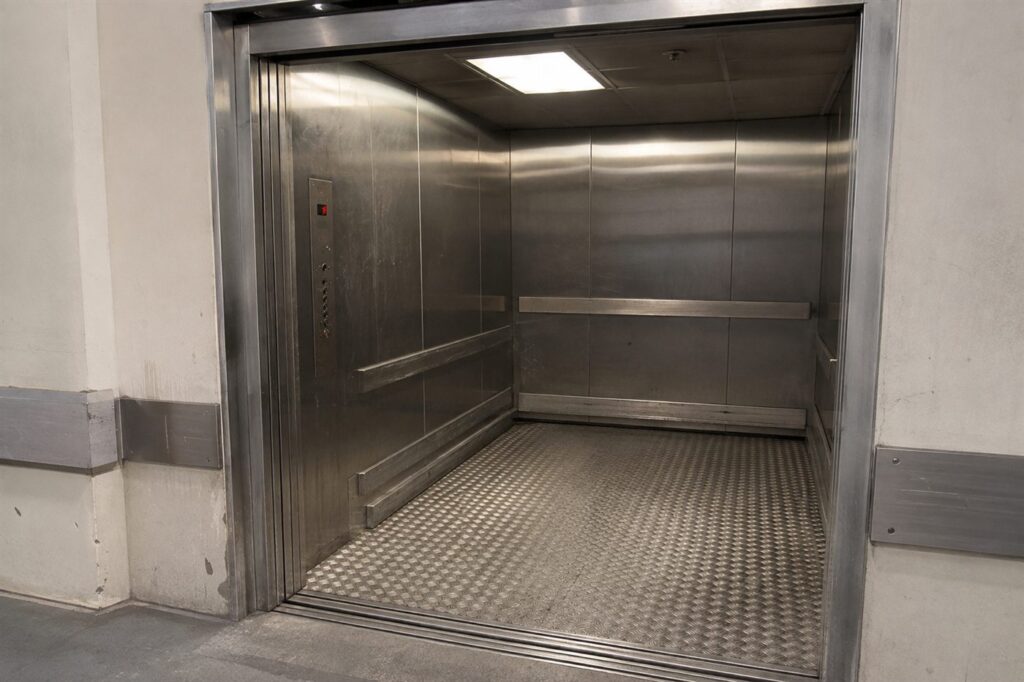
If a passenger elevator is a bus, a freight elevator is a truck. It is built to carry heavy goods rather than people, so everything about it is more massive and stronger: a reinforced load-bearing structure, hard-wearing floor and walls, especially strong doors, and a carrying capacity that begins roughly where a regular elevator's ends, from a ton and a half upward.
Freight elevators are common in factories, warehouses and commercial centers, anywhere goods have to be moved between floors. Its smaller version, the one that carries trays or boxes between a kitchen and the floor above it in restaurants and offices, is usually called a dumbwaiter.
Parking systems
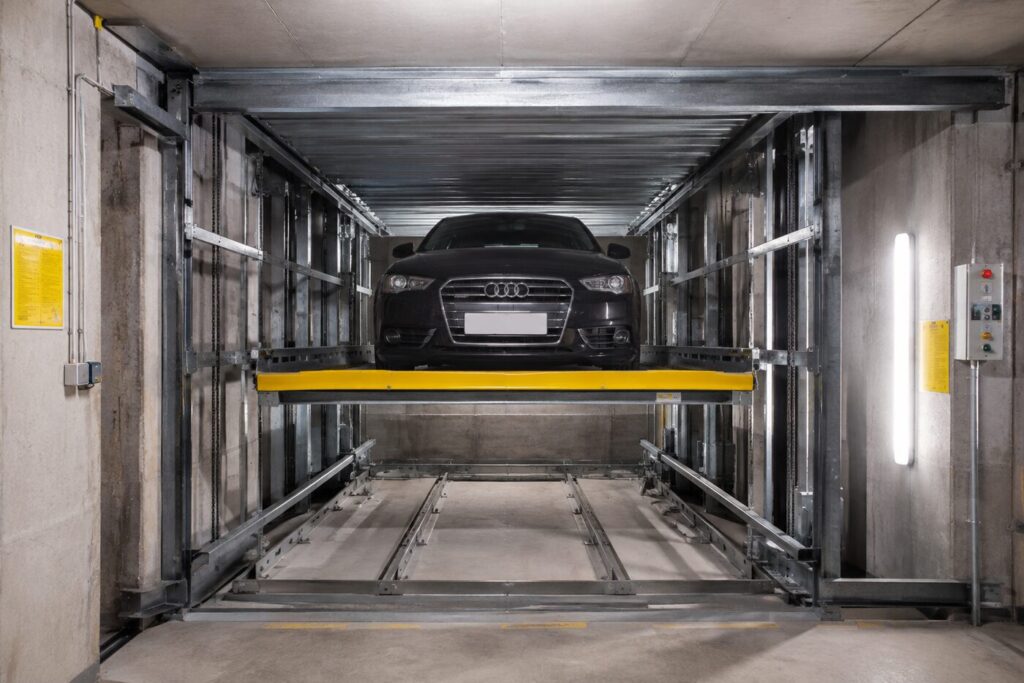
These are essentially elevators, but for cars. Their purpose is to save on expensive parking space, and they come at two levels. In the semi-automatic version (a parking stacker), the driver parks the car on a platform and the system elevators it to free up room for another car underneath. This is a simple solution, common in private parking areas and residential buildings.
In the fully automated version, a computerized system takes the vehicle at the entrance, parks it on its own in an available space, and returns it when needed. This saves the space that would otherwise be wasted on driveways and ramps, and allows far more cars to be packed into the same volume.
And just so you know, not many companies know how to install them, but we do… 🤫
So how do you choose?
There is no single elevator that is simply the best; there is only the one that best suits your particular case. The choice comes down to several factors: the height of the building and the number of floors, the intended use (passengers, goods, accessibility or vehicles), how much space is available, and of course the budget.
In a new building, the architect or project planner is usually the one who chooses the type of elevator. But in an existing building where an elevator is being added, or in a private home, the decision is more complex, and it is well worth consulting professionals who will get to know the structure and match the right solution to it. If you are facing a decision like this, we would be glad to help you understand what really suits your building.